
Is Personal Styling a Good Career in 2027? What a Personal Stylist and Image Consultant Really Do and How to Start

Personal styling has changed a lot over the last few years. It is no longer associated only with celebrities, fashion shoots or luxury shopping. Today, more people are looking for help with their wardrobes, everyday image, workwear and shopping decisions. At the same time, the profession itself has become more flexible: many stylists work independently, build a personal brand and consult clients online.
That is why more people are asking whether personal styling can become a real career.

The answer is yes, but it is important to understand what the profession actually involves. A personal stylist does much more than choose nice clothes or follow trends. The work is built around the client: their lifestyle, personality, body proportions, habits, budget and the image they want to create.
Do you want to become a stylist?
 Learn more here

What does a personal stylist really do?

A personal stylist usually begins with the person, not with the wardrobe.
Before recommending anything, it is important to understand how the client lives. Do they work in an office or from home? Do they need clothes for business meetings, travel, events or everyday life? Do they enjoy experimenting with fashion, or do they prefer simple and practical solutions?
Only after that does the stylist begin to work with colour, proportions, silhouettes, outfit combinations and shopping.
For some clients, the main task is to organise an existing wardrobe and finally understand how to wear what they already own. For others, it may be creating a new professional image, building a capsule wardrobe, preparing for an important event or completely rethinking personal style.
This is why the profession is much closer to problem-solving than many people imagine.

And what does an image consultant do?

The work of an image consultant is often broader.
A personal stylist may focus mainly on clothes, combinations and wardrobe structure, while an image consultant looks at the overall impression a person creates.
This can be especially important for entrepreneurs, executives, public speakers or anyone whose appearance is connected with professional communication.
In practice, however, the two professions often overlap. Many specialists work both as personal stylists and image consultants, combining wardrobe work with a deeper understanding of the client’s goals, lifestyle and public image.
The important thing is not the title itself, but the ability to create a visual image that feels natural for the person and supports what they want to achieve.

Loving fashion is not enough

Many people come to styling because they have always loved clothes, colours and beautiful images.
That is a good starting point, but professional work requires much more.
A stylist needs to understand why one silhouette works for a particular body and another does not. They need to know how colour changes the impression of the face, how proportions influence the whole look, and how to build a wardrobe that works in real life rather than only in photographs.
It is also essential to know how to listen.
A stylist may personally love bright colours, unusual accessories or very fashionable silhouettes, but that does not mean the client will feel comfortable in them. The goal is not to dress everyone in the same aesthetic. The goal is to help each person find a style that suits them.
That is what separates professional styling from simply having good taste.

Do you need a fashion degree?

Not necessarily.
There are many ways to enter the profession, and not everyone starts with a university degree in fashion. Some stylists come from creative backgrounds, while others change careers completely and begin studying styling later.
In fact, previous life and work experience can be very useful.
A stylist works with real people, and clients often come with very practical concerns: they may have changed jobs, moved to another country, gained or lost weight, returned to work after a break, or simply feel that their wardrobe no longer reflects who they are.
The ability to understand these situations is just as important as knowledge of fashion.
What really matters is having a strong professional foundation: understanding colour, body proportions, silhouettes, style directions, wardrobe planning and client communication, and knowing how to apply this knowledge in practice.

Can a personal stylist work online?

Yes, and this has made the profession much more accessible.
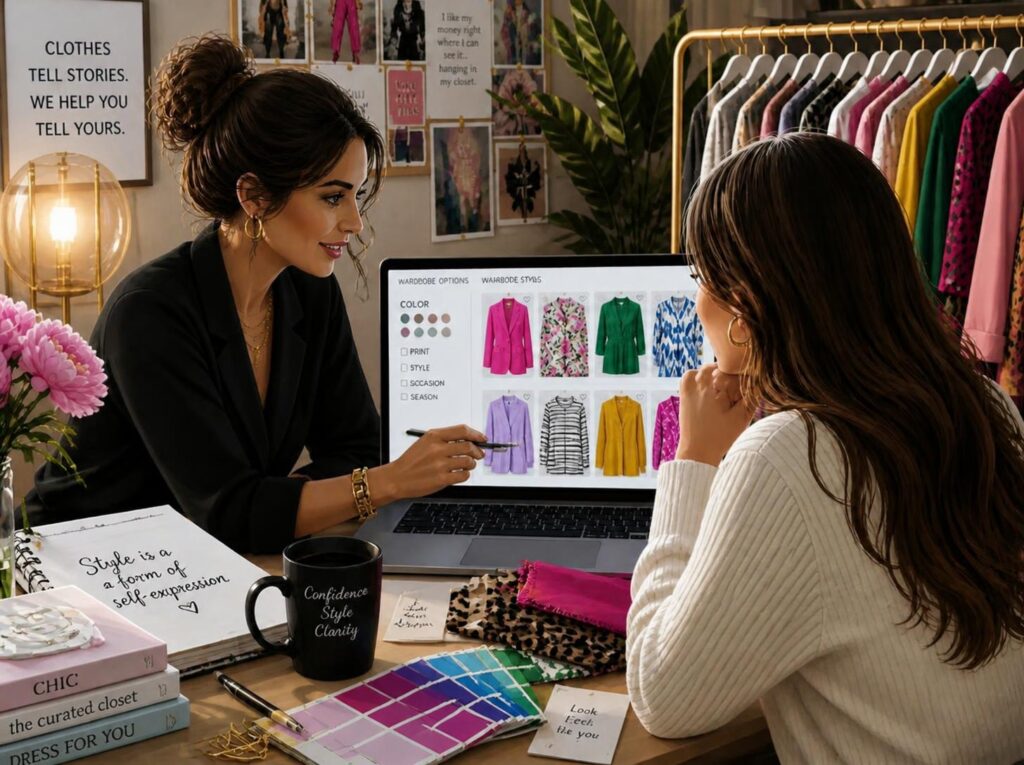
Many styling services can now be provided remotely. A stylist can analyse a wardrobe through photos and video, prepare digital outfit combinations, create shopping selections, conduct consultations by video call and build personalised style guides.
For the client, this is convenient. For the stylist, it means there is no need to work only with people who live nearby.
This is especially attractive for those who want a flexible profession, would like to combine styling with another job, or want to work with clients from different countries.
Of course, some services still work better in person, but online styling has become a normal part of the profession.

What makes someone good at this job?

A good stylist needs both visual skills and people skills.
You need to notice details, understand proportions and have a strong sense of colour and composition. But you also need patience, curiosity and the ability to ask the right questions.
Often the most important part of the work is understanding why a client is unhappy with their wardrobe.
Sometimes the problem is not that they do not have enough clothes. Quite the opposite: they may own many things, but nothing works together.
Sometimes they keep buying the same type of clothing because it feels safe, even though it no longer suits their lifestyle.
Sometimes they simply do not know what image they want to create.
A professional stylist helps turn this confusion into a clear and practical system.

Is personal styling a creative profession?

Yes, but creativity is only one part of it.
The most interesting thing about personal styling is that every client is different.
One person may need a polished business wardrobe. Another may want to look more modern without changing everything they own. Someone else may be starting a new chapter in life and want their appearance to reflect that change.
The stylist’s job is to find a solution that works for that specific person.
That is where creativity becomes practical.
It is not about creating an impressive look for one photograph. It is about creating a wardrobe that the client will actually wear.

How do stylists get their first clients?

Most people do not begin with a full client list.
Usually, the first step is practice.
Future stylists often start by working on training projects, helping friends or test clients, creating wardrobe analyses and building a portfolio.
This process is important because it helps turn theory into real experience.
Later, clients may come through recommendations, social media, professional networking or personal content.
Over time, many stylists also choose a niche. Some focus on business image, others on capsule wardrobes, personal shopping, women over 40, colour consulting or online styling.
A clear direction often makes it easier for clients to understand what kind of specialist you are.

Is personal styling a good career in 2027?

For someone who genuinely enjoys both fashion and working with people, it can be a very rewarding profession.
It offers a lot of flexibility, especially now that online consultations have become common. You can work independently, develop your own style of working, choose a specialisation and build a personal brand.
But it is not a profession based only on inspiration.
You need knowledge, practice and the ability to solve real client problems.
The strongest stylists are not simply the people who know what is fashionable. They are the ones who understand how to translate fashion into something practical, personal and useful for another person.

Want to Become a Personal Stylist?

Italian E-Learning Fashion School is now enrolling students for a new group of the Stylist Course.

The program is taught online following an Italian approach to fashion and styling, so you can study from anywhere in the world.

During the course, you will learn how to work with color, body proportions, body types, style directions, client wardrobes and contemporary fashion trends. The program is designed to give you both the theoretical foundation and the practical skills needed to begin working with real clients as a personal stylist and image consultant.

Learn more about the program and enrolment conditions here

Copyright © IELFS the Italian Fashion school all rights reserved.
crossmenuchevron-down