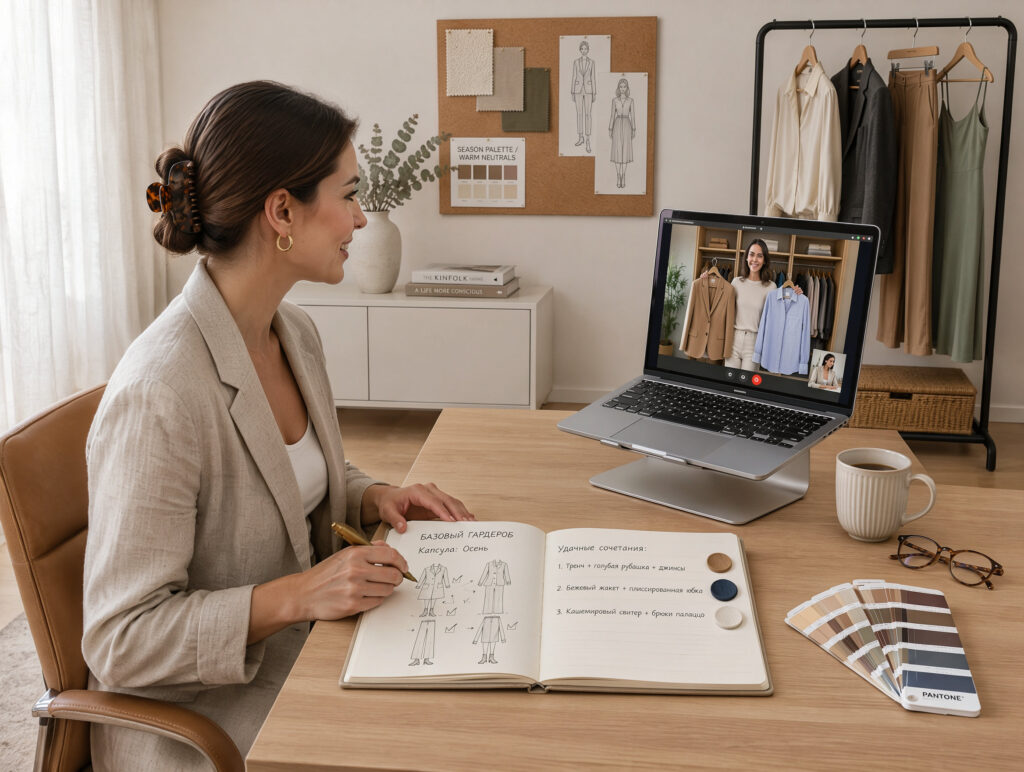
How to Work as a Stylist from Home: 5 Services You Can Offer Online

Can you become a stylist if you live in a small town, have moved to another country, or are staying at home with a young child? Absolutely! You don't need to open your own studio, work in a fashion boutique, or relocate to a major city to build a career in styling.

Today, stylists can consult clients from different cities and countries, help them build wardrobes, create outfits, and even assist with shopping — all from home. All you need is a computer, an internet connection, professional knowledge, and good communication skills.

Let's explore five services that stylists can offer entirely online, how to organize this type of work, and who might benefit most from this career.

Do you want to become a stylist?
 Learn more here

1. Online Wardrobe Review: Helping Clients Make the Most of Their Clothes

You probably know the feeling: your wardrobe is full of clothes, but you still have nothing to wear. This is one of the most common problems people bring to a stylist.

The good news is that you don't need to visit a client's home to review their wardrobe. The entire process can be completed remotely.

How does it work?

First, the stylist gets to know the client, learning about their lifestyle, profession, clothing preferences, and main wardrobe challenges.

Next, the client photographs their clothes or presents them during a video consultation. The stylist analyzes the wardrobe and helps determine which items to keep, how to combine different pieces, and what is missing to create complete outfits.

For example, a client may own 15 blouses, eight skirts, and several pairs of trousers but repeatedly wear the same two outfits. A stylist can show them 20–25 new combinations using clothes they already own.

What the client receives: Wardrobe recommendations, ready-to-wear outfit combinations, and a list of missing items.

What the stylist needs: Professional knowledge, a computer, photographs of the clothing, and a convenient tool for creating collages, such as Canva.

This is one of the most accessible services for beginner stylists looking to gain practical experience.

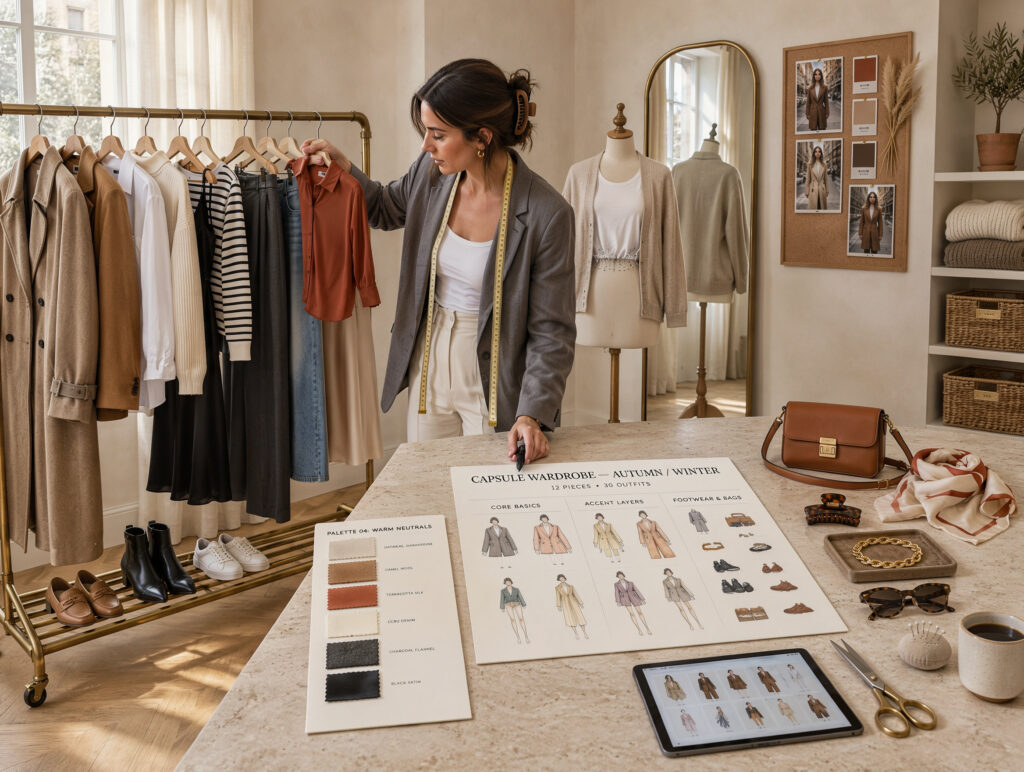
2. Creating a Capsule Wardrobe: One of a Stylist's Key Services

Imagine that a client is starting a new job. They want to look professional but don't want to spend money on dozens of new items.

A stylist can create a capsule wardrobe: a carefully selected collection of clothing in which most pieces work well together.

For example, just 12–15 clothing and footwear items can provide numerous outfits for work, walks, meetings, and everyday life.

The entire process can be completed online.

The stylist selects clothes from online stores, creates collages of complete outfits, and sends the client a presentation. It can show how to wear each item, which accessories to add, and which combinations work for different occasions.

Capsule wardrobes can be designed for many purposes: office wear, life as a new parent, travel, holidays, a new season, or a move to another country.

What the client receives: A ready-made wardrobe featuring specific items, shopping links, and examples of outfit combinations.

What the stylist needs: An understanding of colors, cuts, and proportions, knowledge of available retail collections, and the ability to create attractive visual presentations.

This service is particularly convenient for remote work because the stylist and client can live in completely different countries.

3. Online Personal Shopping: The Stylist Selects Clothes, and the Client Shops Independently

Many people dislike shopping. Some don't know what suits them, others are tired of endless fitting sessions, and some simply don't have enough time.

Online personal shopping is an ideal service for these clients.

Imagine a woman who wants to refresh her wardrobe for spring and has a specific budget in mind. She tells the stylist what she needs, shares photographs of herself, provides her measurements, and explains her preferences.

The stylist explores online stores and prepares a selection of suitable items based on the client's budget, body shape, color preferences, and lifestyle.

The client receives links to specific products, places the orders, and tries everything on at home. If necessary, the stylist can help assess the fit using photographs or a video call and decide which items to keep and which to return.

What the client receives: A personalized clothing selection, less time spent searching for items, and professional guidance when making purchasing decisions.

What the stylist needs: A good knowledge of online stores, sizing systems, fabric properties, and garment fit.

Stylists don't have to limit themselves to retailers in their own country. For example, a stylist living in Germany can work with clients in Italy, Spain, the United Kingdom, or other countries, provided they understand the available stores and delivery conditions.

4. Personal Style Consultations: Working with Clients over Video Calls

Not everyone needs a complete wardrobe review. Sometimes, a single consultation is enough to solve a specific style-related problem.

A client might want to discover which colors suit them, learn how to visually balance their proportions, or find out which trouser cuts are most flattering.

These questions can be addressed during an individual online consultation.

Before the meeting, the stylist reviews the client's photographs, preferences, and appearance. During the consultation, the stylist explains their recommendations, presents clothing examples, and answers questions.

Consultations can cover a wide range of topics:

  • Choosing a color palette for the wardrobe.
  • Selecting clothing cuts that complement the client's proportions.
  • Creating a new look after a career or lifestyle change.
  • Choosing an outfit for an important event.
  • Discovering an individual style.

For example, a woman may have spent years working in an office with a strict dress code but has now switched to remote work. Her previous suits are no longer necessary, yet sports trousers and T-shirts don't reflect how she wants to look.

A stylist can help her develop a new everyday style that is both comfortable and attractive.

What the client receives: Personalized recommendations and a clear plan for updating their style.

What the stylist needs: Professional knowledge, appearance analysis skills, and the ability to communicate recommendations clearly and work effectively with clients.

Online consultations are easy to conduct from home, allowing stylists to choose their own working hours.

5. Creating a Personal Lookbook: Ready-to-Wear Outfits for Every Day

Another interesting service is creating a personalized lookbook.

A lookbook is a digital collection of complete outfits selected specifically for an individual client.

For example, a client sends photographs of their wardrobe, and the stylist creates 30 outfits for work, walks, meetings with friends, dates, and trips.

Each outfit is presented as a visual collage. The client simply opens the file in the morning and chooses what to wear.

This format is particularly useful for people who don't want to spend time deciding what to wear every day.

Lookbooks can also be created for specific purposes. For example, a stylist might prepare 15 outfits for a two-week trip or put together a wardrobe for someone's first month at a new company.

What the client receives: An attractive digital presentation featuring complete outfits and recommendations for combining clothing items.

What the stylist needs: The ability to put outfits together, work with photographs, and create professional presentations.

This is an entirely remote service. Moreover, the stylist can complete much of the work independently without requiring the client's constant involvement.

Who Can Benefit Most from Working as an Online Stylist?

One of the greatest advantages of being an online stylist is that you aren't tied to a particular city, office, or workplace. This makes the profession appealing to people in many different circumstances.

Parents of Young Children Who Want a Rewarding Career

When you have a young child at home, following a traditional office schedule can be difficult. At the same time, many parents want to develop their own professional skills, pursue personal goals, and gradually build an independent income.

An online stylist can organize their working hours around their family's needs. For example, while a child is sleeping, they can create outfit collages, browse online stores, or prepare recommendations for clients.

Video consultations require appointments, but many other tasks can be completed at convenient times.

Of course, learning the profession and finding the first clients takes time. However, it's possible to start with a few small projects and gradually increase your workload.

People Who Have Moved to Another Country

Moving abroad often means having to rebuild your professional life. Even with an education and previous work experience, finding suitable opportunities in a new country can take time.

An online career allows stylists to work with international clients regardless of where they live.

For example, a stylist who has moved to Italy, Spain, or Germany can consult clients in different countries, create capsule wardrobes, and conduct online wardrobe reviews.

Living abroad can also become a professional advantage. Stylists can explore local brands, learn about European fashion, and recommend products from international retailers.

Naturally, anyone working professionally should take local business registration, taxation, and payment requirements into account. However, the online format makes it possible to build a client base beyond a single city.

People Living in Small Towns

Imagine living in a small town with very few fashion businesses, major boutiques, or opportunities to work as a personal stylist.

In the past, this might have been a significant obstacle to developing a career. Today, the situation is different.

You can live in a small town while working with clients from major cities, other regions, and even other countries.

For an online stylist, professional skills, the quality of their work, a strong portfolio, and the ability to attract clients matter far more than their home address.

People Looking for a Career Change After 35 or 45

Sometimes, the desire to change careers appears later in life, after many years working in accounting, education, sales, or administration.

It may seem that the fashion industry is exclusively for young people. However, a personal stylist is neither a model nor a fashion influencer.

Their job is to understand clients, their lifestyles, their needs, and their individual characteristics.

In fact, life experience and communication skills can be valuable advantages. A 45-year-old woman, for example, may feel more comfortable entrusting her wardrobe to a specialist who understands her lifestyle, priorities, and everyday challenges.

The key is to gain professional knowledge and learn how to apply it in practice.

How Much Can You Earn as an Online Stylist?

Online stylists don't have a fixed salary. Their income depends on the number of clients, service fees, experience, specialization, and ability to promote their services.

A stylist might combine several services, such as online consultations, wardrobe reviews, capsule wardrobe creation, and personalized lookbooks.

Earnings can vary significantly depending on the local market, the complexity of the services offered, and the stylist's experience. The figures charged by beginners may differ considerably from those of established professionals.

The important advantage of this profession is flexibility: you can combine different services, set your own workload, and gradually develop your business.

Where Can Online Stylists Find Their First Clients?

This is one of the main questions for anyone considering a career in styling.

You don't need to start with expensive advertising or a social media account with thousands of followers.

One option is to find your first clients among friends and acquaintances by offering a specific service. For example, instead of simply advertising a “stylist consultation,” offer to create 10 new outfits using clothes they already own.

Another option is to run a small blog on social media, sharing practical examples of your work. Before-and-after transformations, capsule wardrobe selections, common clothing combination mistakes, and shopping tips are particularly effective content ideas.

It's also useful to choose a specific target audience. You might focus on parents of young children, women over 40, business professionals, or people who have moved abroad and want to adapt their wardrobes to a new lifestyle.

The clearer your specialization, the easier it becomes for potential clients to understand exactly how you can help them.

Can You Become an Online Stylist Without Previous Fashion Industry Experience?

Yes! You can begin your training from scratch. You don't necessarily need to know how to draw, sew clothes, or have a degree in fashion.

However, having a good eye for style isn't enough on its own.

A professional stylist needs to understand color combinations, body proportions, clothing cuts, style directions, accessories, and the principles of wardrobe building.

It's equally important to learn how to work with clients: asking the right questions, taking their budgets and preferences into account, explaining recommendations, and creating professional presentations.

These skills distinguish a professional stylist from someone who simply enjoys dressing well.

Once you've acquired the necessary knowledge, you can begin with online consultations and smaller projects, gradually building your portfolio and client base.

Study Styling Online with Italian Fashion School

If you love fashion and want to turn your interest in clothing into a profession, we invite you to study with Italian Fashion School.

You can train to become a personal stylist and image consultant from scratch, learning Italian fashion methods without having to relocate.

Our teachers are fashion industry professionals from Italy. The training takes place online, and every student has a personal mentor who provides guidance with practical assignments and supports them throughout their studies.

During the course, you'll learn how to analyze appearance, select colors and clothing cuts, create capsule wardrobes, put together stylish outfits, and work with clients. You can apply these skills to online consultations and other remote styling services.

Our graduates live in different countries around the world, and some work with clients online. They aren't limited to a single city and can develop their professional careers regardless of where they live.

Perhaps becoming a stylist will give you the opportunity to pursue a rewarding career, organize your own working hours, and earn an income while helping people discover their personal style.

Enrollment is open

Copyright © IELFS the Italian Fashion school all rights reserved.
crossmenuchevron-down